

Blog
Governance without the red tape
A simple training-led way for Irish SME teams to build useful AI agents without losing control.
What shipped
AI agent tools are now simple enough for non-technical teams to use. In Microsoft Copilot Studio, Google AI Studio and similar tools, a manager can describe a task, connect approved knowledge, set a few rules and test an assistant without writing code.
That does not remove the need for governance. It changes the kind of governance you need.
For an Irish SME, the useful question is not “Can we build an agent?” It is “Can we build one that the team understands, tests and reviews before it affects a customer, supplier or employee?”
This is where light guardrails matter. Not a 40-page policy that nobody opens. Not a committee for every small experiment. Just a shared way of deciding what an agent is allowed to do, what information it can use, who checks its output and when it must stop.
That is the focus of agent-building training: helping non-technical teams learn how to design, test and govern small AI agents as decision support tools. A person reviews, tests and approves the output before operational use.
Richard recently completed a cross-departmental Copilot Studio workshop for a large organisation. The practical lesson was clear: teams do not need to become developers, but they do need a simple operating model. They need to know what “good enough to test” looks like, and what “not safe to use yet” looks like.
Who should care
This matters if your team is already experimenting with AI tools, or if staff are asking whether they can build their own assistants for internal work.
Typical use cases include answering internal policy questions, drafting replies from approved material, preparing meeting notes, checking forms for missing information, summarising supplier emails or guiding staff through a standard process.
None of these need a data science team. Most do need better habits.
A useful AI agent in an SME should have four plain rules.
First, it should have a defined job. “Help the service team draft replies from our support guide” is clear. “Help with customers” is too broad.
Second, it should use approved sources. If the agent is meant to answer from your handbook, price list or service process, those sources should be named and maintained.
Third, it should have a boundary. The agent may draft, summarise, classify or suggest. It should not commit the business, change records, send final messages or make decisions unless a human has reviewed and approved the output.
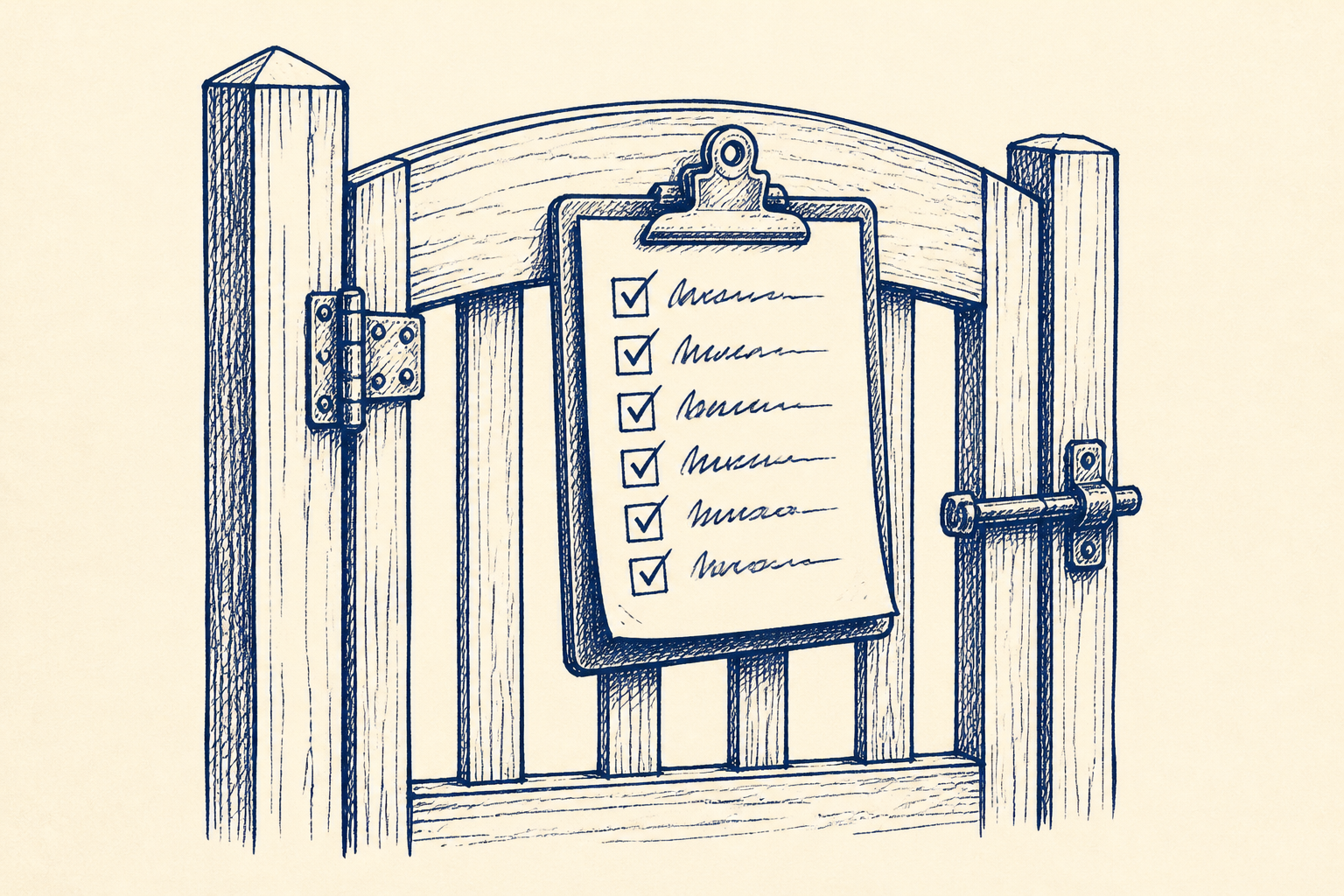
Fourth, it should include a named human review step. I usually call this the Human Review Gate. It is the point where a real person checks the agent’s answer, tests whether it fits the case and decides what happens next.
If your team can follow those four rules, you are much closer to safe, useful AI adoption than a business with a long policy and no working practice.
For more thinking on practical SME adoption, see the Artellis insights section.
A worked example
Imagine an Irish SME with a small operations team. Staff receive repeat internal questions about expenses, holiday requests, delivery cut-off times and supplier onboarding. The answers live across documents, email threads and a few shared folders.
The team wants to build an internal agent to answer common questions. The fear is that this will become a technical project, or that the agent will give confident but wrong advice.
A light governance approach would start with a one-page agent brief.
The agent’s job: answer internal operations questions using approved company documents.
Its sources: the current staff handbook, operations checklist, supplier onboarding note and expenses guide.
Its users: internal staff only.
Its limits: it can answer, summarise and point to the relevant source. It cannot approve expenses, change supplier details, interpret employment issues or answer from memory if the source is missing.
Its Human Review Gate: an operations manager reviews sample answers before launch, then reviews flagged answers and any answer used for a sensitive case.
Its test set: a short list of real questions the team already receives, including easy, awkward and out-of-scope examples.
This is not bureaucracy. It is common sense written down before people start clicking buttons.
In training, the team would then build a first version of the agent, test it against the sample questions and improve the instructions. They would learn how to spot weak answers, how to tighten the scope and how to tell the agent to admit when it does not know.
The output is still decision support. If the agent drafts a response about an expenses query, a person checks it. If the source document is unclear, the fix is not to blame the AI. The fix is to improve the source or narrow the agent’s role.
That is the main shift for managers: agent-building is partly a tool skill, but mostly a workflow skill.
Where I'd start
Start with one low-risk internal workflow where the pain is visible and the consequences are manageable.
Good first candidates are internal FAQ support, policy lookup, meeting preparation, enquiry triage or first-draft responses based on approved material. Avoid payroll decisions, legal advice, HR disputes, regulated judgement calls or anything where the team is not ready to review outputs carefully.
Then give the team a simple build pattern:
- Name the job.
- Name the approved sources.
- Name what the agent must not do.
- Create test questions.
- Add the Human Review Gate.
- Pilot with a small group.
- Improve the workflow before widening use.
This keeps governance close to the work. It also helps managers see the difference between a useful assistant and an uncontrolled shortcut.
The clear takeaway: non-technical teams can build useful AI agents, but only if training includes guardrails from the start.
If you want to explore this for your own team, book a 20-minute call about agent-building training and bring one workflow you think could be improved.
Common questions
- Can my non-technical team really build AI agents?
- Yes, for the right kind of workflow. The team does not need to become software developers, but they do need training on scope, approved sources, testing and the Human Review Gate.
- How do we stop AI agents giving wrong answers?
- You reduce the risk by giving each agent a narrow job, approved source material and clear limits. A person must review, test and approve outputs before they are used in the business.
- What is a good first AI agent for an SME?
- Start with a low-risk internal workflow such as policy lookup, enquiry triage or drafting from approved material. Avoid sensitive decisions until the team has a tested process and a clear human review step.
One Workflow
One workflow a week, worth automating.
I look at what your company actually does and write you a short letter: the opportunity, the likely hours it gives back, how involved it is, where the human review sits, and a first step you could run yourself this week. Founding cohort, limited to 100 companies while I personally review every week's recommendations. Reply to any letter and you reach me, not a form.
See a sample letter and how it works
Everything in the letter is decision support: review, test and approve before anything runs in your business. Your email is used for One Workflow only.