

Blog
Before you build, rank your AI ideas
A one-week AI use case screening exercise can help an SME choose two or three safe prototype candidates instead of chasing every idea at once.
What shipped
The European Commission has been promoting applied AI through the Apply AI Startup Award, a pitching process for European startups and scaleups working across strategic sectors. The useful signal for an Irish SME is not the award itself. It is that applied AI is moving from general interest into practical decisions about where it fits, what problem it clears, and who should trust the output.
That is the same decision many SMEs now face internally. The management team knows AI may help with admin, operations, sales support, customer enquiries, finance, HR, or document handling. The problem is choosing the right first use case.
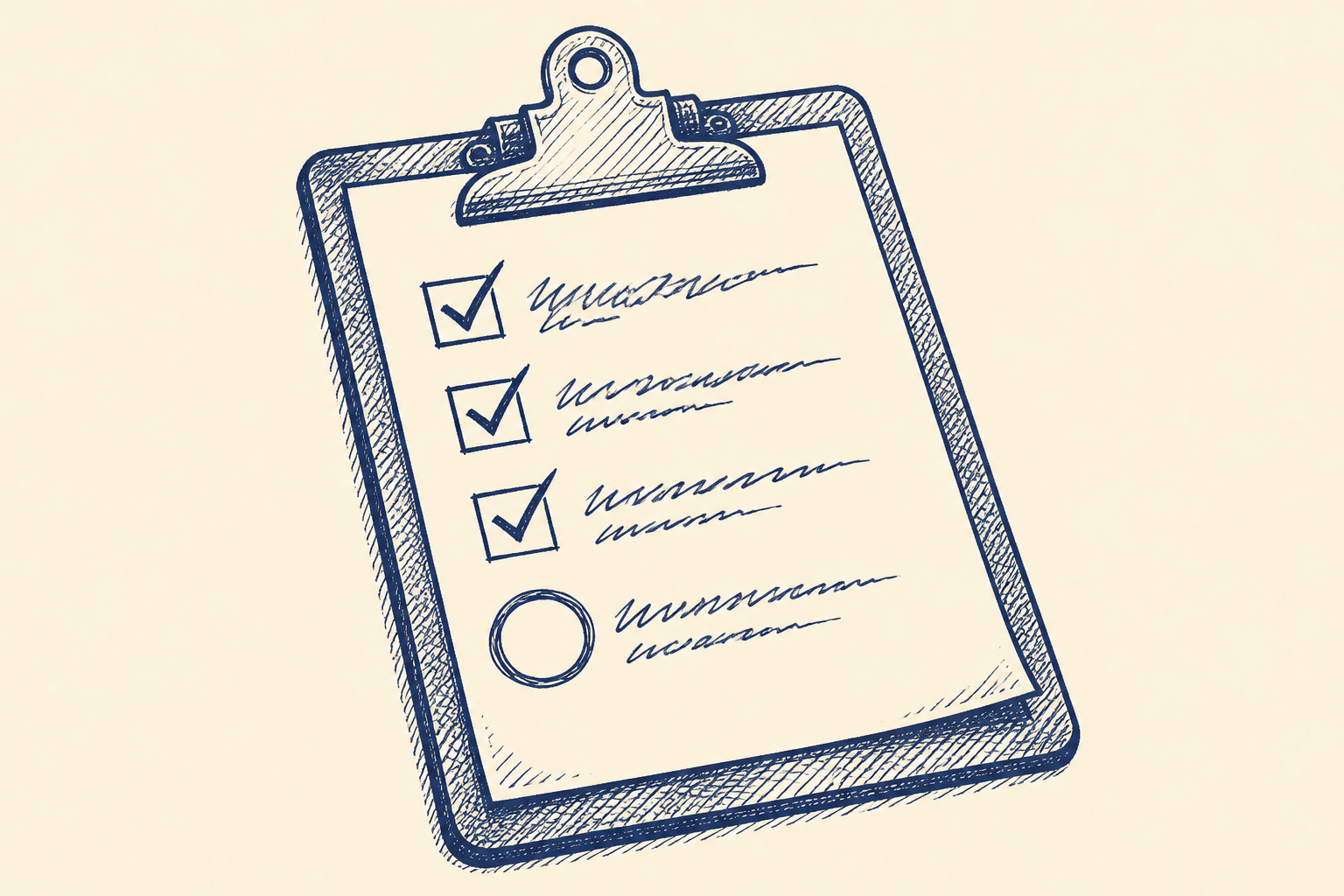
A sensible answer is an AI use case screening and prototype backlog. It is a short workflow that captures candidate AI ideas from each business function, scores them, rejects the poor fits, and leaves a ranked shortlist of two or three prototype candidates. The output is decision support, not an automated business change. A person reviews, tests and approves before anything is used operationally.
This kind of screening is valuable because AI ideas vary widely. Some are simple, safe and useful, such as classifying inbound emails, extracting fields from supplier documents, or summarising internal policies for staff. Others are too risky, too vague, too dependent on poor data, or too close to regulated decision-making. The screening process makes that visible early, before money and staff time are spent building the wrong thing.
Who should care
This is for owners, managing directors, operations managers, admin leads and finance managers in SMEs of roughly 10 to 250 people. It is especially relevant if the business has had several AI conversations but no clear first project.
Typical signs are easy to spot. Someone has tried ChatGPT for drafting. A manager has seen a demo from a software vendor. A department has a spreadsheet that everyone dislikes. Customer emails are being copied between inboxes. Staff are asking whether AI can handle routine queries. The business knows there is value somewhere, but every idea feels half-formed.
The screening approach suits management, operations and admin because these functions usually see many small workflow problems. They know where work stalls, where information is retyped, where approvals are unclear, and where staff spend time sorting rather than deciding.
It is also useful where the team is concerned about safety. Not every AI idea should be built. An SME should avoid use cases that need model training from scratch, a data science team, a six-figure platform licence, large-scale MLOps, or an enterprise integration the business does not own. It should also avoid anything where an AI output would make a high-impact decision without proper human control.
The practical goal is modest: a prioritised prototype list in one week. That list should show which ideas are worth a short build sprint, which should wait, and which should be rejected.
A worked example
Take a 60-person Irish distribution business. It has sales, operations, finance and customer service teams. The owner wants to explore AI but does not want a long strategy project. The team agrees to screen ten candidate workflows.
In a 90-minute discovery session, each function names the work that feels repetitive, slow or error-prone. The first list includes: triaging supplier invoices, summarising customer complaint emails, drafting replies to delivery queries, checking purchase order details, updating a stock exception spreadsheet, preparing weekly sales notes, searching product documentation, qualifying inbound enquiries, routing HR policy questions, and extracting delivery details from attachments.
Each idea is scored against five practical criteria.
First, expected operational value. Does this save time, reduce rework, improve response speed, or help managers make better decisions?
Second, data availability. Are the documents, emails, policies or records already available in a usable form? Can the AI assistant be grounded in company material rather than guessing from the open web?
Third, effort. Could a prototype be built in days or a few weeks, or would it need a major platform change?
Fourth, risk. Could a wrong answer cause financial, legal, customer or staff harm? Would the output be advice, a draft or a classification, rather than an automatic decision?
Fifth, human review. Who checks the output, and what exactly do they approve before use?
After scoring, three ideas rise to the top.
The first is customer email triage. The AI reads incoming emails, suggests a category, extracts the order number if present, and routes the message to the right queue. Human review step: Customer Service Lead reviews routing rules and spot-checks AI classifications before the workflow is used live.
The second is supplier invoice extraction. The AI extracts supplier name, invoice number, dates, amounts and purchase order references into a review table. Human review step: Accounts Payable Reviewer checks extracted fields against the original invoice before posting or payment.
The third is internal product documentation search. Staff ask questions and receive grounded summaries from approved product sheets and service notes. Human review step: Operations Manager approves the source document set and reviews sample answers before release to staff.
Several ideas are rejected. Automated complaint resolution is too risky for now. HR policy answers need more work on source documents. The stock exception spreadsheet may be better fixed with a small internal application before adding AI.
The final output is a one-page backlog. It lists the top three prototypes, their scores, the named reviewer, the expected benefit, and the reason each is low-risk enough to test. Management can then approve one short sprint instead of debating AI in the abstract.
Where I'd start
Start with a tight, practical session rather than an AI strategy workshop. Bring three functions into the room, for example operations, admin and finance. Ask each to bring two or three workflows where staff spend time reading, copying, sorting, summarising or drafting.
Do not begin with tools. Begin with the work. For each workflow, write down the input, the current steps, the output, the person who uses the output, and what could go wrong if it is wrong. Then score the idea for effort, data availability, human review, risk and operational value.
The most important question is: who reviews the AI output before it affects the business? Name the role. If nobody can review it, the idea is not ready. If the reviewer is clear, the source material exists, and the value is obvious, it may be a good prototype candidate.
For most SMEs, a good first backlog has only two or three items. That is enough. The point is not to prove that AI can touch every department. The point is to choose a safe decision-support workflow, build a small prototype, test it with real users, and let management approve or reject the next step with evidence.
Artellis can run this screening in a few days: discovery, scoring, shortlist, and a prototype recommendation. The result is a clear next move, not another open-ended AI conversation.
One Workflow
One workflow a week, worth automating.
I look at what your company actually does and write you a short letter: the opportunity, the likely hours it gives back, how involved it is, where the human review sits, and a first step you could run yourself this week. Founding cohort, limited to 100 companies while I personally review every week's recommendations. Reply to any letter and you reach me, not a form.
See a sample letter and how it works
Everything in the letter is decision support: review, test and approve before anything runs in your business. Your email is used for One Workflow only.